

Skrymir's Glove
This morning in November in the bar
of the Angel there is an open fire.
I tell you this so you imagine it
as though the bar in the Angel were a
place that has been given to itself, full
of itself, filled with the things there are in
here, such as the fire. Not the words but the
flames. This is quite possible though you know
that what you have of it, its hum and pop,
could not be prior to the poem. You
don't take shelter in the darkness and the
cold of open countryside which, in the
morning, will turn out to be inside the
giant's glove. You sit down at a table
by the window where you can feel the flames,
take off your gloves, wait for Louise, who comes
through doors into such places, those given
to themselves. You still enjoy the way she
does, and here she is. Grey eyes. Black hair. Go
for the gloves. Fashioned by trolls, the food is
tied up in impenetrable iron.
The cat is stuck into the shape of sleep
and can't be levered off the floor. Your tongue
proves chocolate  dust on cappuccino
froth. It's all as heavy and as hard as
that. But it holds good. There is some truth in
every bit of it. Louise can help, things
on her mind, her fingers lost around the
coffee cup. The good spectators will now
imagine someone facing her across
the table, where otherwise there would be
empty space. Someone is called to work on
a complete Louise, lever her off the
floor, fix her in iron, put her amongst
grey eyes, black hair, and seat her opposite.
That will be me, facing Louise, feeling
the fire inside the Angel bar, inside
the giant's glove, the window to my left.
I will arrive precisely when Louise
picks up her cup, touches the iron, wakes
the terrific cat, and both of us are
given to ourselves, together with trolls,
perhaps, and incredible November.
In my previous post on an RF Langley poem, I devoted considerable time to research. Were it not “No Effort November,” I might be telling you what I learned from the author’s journal and the internet about the bar, about Louise, the mythology in question. But tis the season to have nothing learned to say. Instead, today’s post will operate on the level of those rhyme-highlighting YouTube “analyses” of rap songs.
This approach is suggested by the recurring elements of the poem. November, the bar, fire, trolls, gloves, Louise, the cat. Each recurs several times and then in quick succession in the last few lines like the envoi of a sestina, roughly in reverse order of appearance. There is a sense of formal satisfaction, of the poem wrapping itself up. And yet I find the poem so strange and indeterminate that I don’t experience this wrapping up as fully satisfying.
What’s going on here? Well, start with the title. I have cheated and done one singular research. The title refers to a myth in which Odin and pals, out adventuring, stop to sleep in what they think is a hall, but which turns out to be the giant Skrymir’s glove. The suggestion, then, starting with “the bar / of the Angel” is that this place to will turn out to be quite different from what it appears.
We open on a spare establishment of the scene. A place, a time, a small suggestion of why we might be here (to sit by the fire, to get away from the cold). How many stories have begun in such a way? It is the cliche opening of every D&D campaign. But instead of a quest, we get the speaker’s account of their own narration, “I tell you this so you imagine it,” though it quickly goes strange and tautological. What is it for the bar to be “given to itself,” and why bother specifying the bar is “filled with the things there are in / here”? Thanks, very helpful.
But that resistance is the whole thing. In traditional narrative description, the author is trying to make the scene feel real, though usually in a compressed fashion so that we can then get onto the narrative. That will usually take the form of generalities of time and place (a bar in November) and a few telling details. That is partly the mode of the description here, but the poem is also attending to how its narration works.
For what makes a scene “feel real” is not intrinsic to the narration itself. Rather it is in part a contribution of the reader. We can imagine the bar in or of the Angel only because we have been in bars before, we have stepped into a warm place with a fire from a cold of open countryside. There is an interdependence here: it is up to the reader to supply “not the words but the flame” but the author must supply the words, the “hum and pop.” The collaboration that makes fiction possible relies on trust, that the author will “keep his story straight,” even if that story is fantastical. With “You / don’t take shelter in the darkness…,” the author is attending to their power to betray that trust, to turn the bar into a giant’s glove.
Ye the speaker does not follow through on that threat, but continues with the narrative. We are not here in the bar merely to contemplate the nature of narrative and linguistic exchange. No, we’re here to meet Louise. Although none of this could be “prior to the poem,” “you still enjoy the way she does.” The description here returns to the richness of traditional narrations, and is imbued with warmth, desire, whimsy. The meeting has some purpose, addresses some need (“Louise can help”) even if we cannot say precisely what that need is.
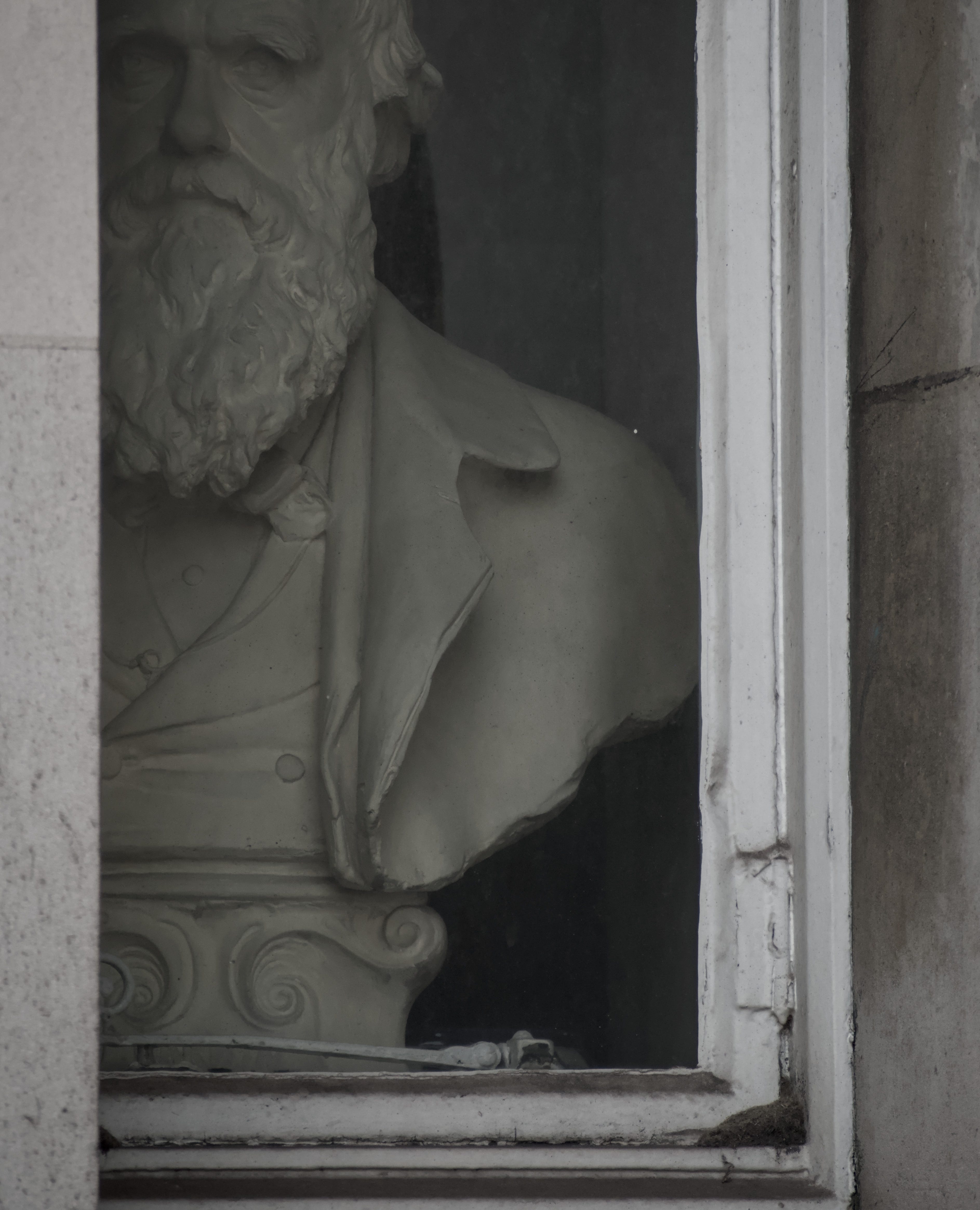
And yet at this point where it seems the poem might name and address its need, the narration goes unstable. “Things on her mind” and then “The good spectators will now / imagine,” we move from the joint imagination of author and reader to the inner imaginations of the characters. It is here that that bar becomes the giant’s glove. Indeed, the instability is retroactive, the spectator’s will “now / imagine someone facing her,” as if we had never been there, waiting for Louise.
“You” is an unstable pronoun in poems. It flits between the you of the audience (outside the text) and the you of some character in the text, the audience surrogate. The “I” similarly flits between author and author surrogate (the speaker). Yet the distinction between an author and audience surrogate is subtle at best and we see it shatter here and it shatters in response to the need of the poem appearing on the scene, as if in sudden realization that the person who “Louise could help” is me.
But the realization is given verbal form only after a delay. Indeed, the need is first placed in a liminal, unowned form. “Someone is called to work on / a complete Louise.” What would that be? It is narrative, imaginative work. That of “making real.” But we have already seen that there is a gap in narration that makes that impossible for a poem to do. The author brings the words, the reader brings the fire, but here what is called for is words and fire together.
One of the ecstacies of love is that it calls for both sharing and protecting the image of the beloved. One is proud of loving and so wants the “good spectator” to witness the source of pride; yet the world will never love Louise as you love Louise. Hence it is necessary for all else to be made background and accessory to love and for the “you” to slip the scene entirely. Indeed, this climax even places Louise where the “you" was, in the bar, waiting. The need is for the flames and not the words and so it is necessary for the poem to end, to make a show of its ending, to make space.